Dubai luxury short-term rental operator / AI Adoption, Operations Automation, and Systems Integration
AI Adoption Across a Dubai Luxury Rental Portfolio
Building a scalable operating model for revenue management, guest service, property operations, and owner reporting.
Artifact Innovations supported the transformation of a Dubai luxury short-term rental portfolio by integrating AI, automation, and connected operating systems across the full asset-management lifecycle.
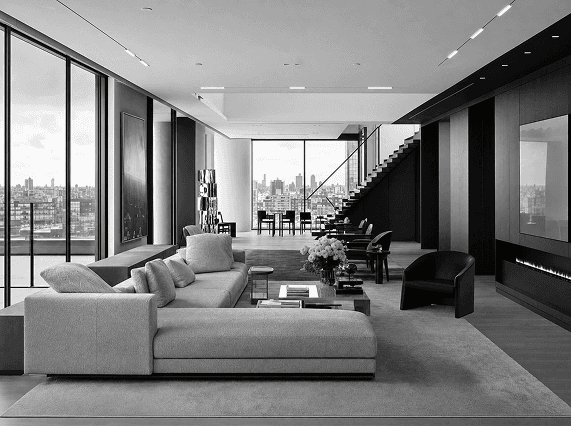
Engagement overview
- Client
- Dubai luxury short-term rental operator
- Engagement
- AI Adoption, Operations Automation, and Systems Integration
- Period
- June 2025 to April 2026
- Region
- Dubai, United Arab Emirates
- Asset class
- High-value short-term rental properties
Measured impact
Between June 2025 and April 2026, the portfolio generated more than USD 481,000 in net revenue, distributed more than USD 253,000 directly to property owners, maintained an 87.1% average occupancy rate, and achieved occupancy peaks of 97%.
Net revenue generated
Produced across the portfolio between June 2025 and April 2026.
Distributed to property owners
More than half of portfolio net revenue was distributed directly to owners during the measured period.
Average occupancy
Maintained across the portfolio throughout the reporting period.
Peak occupancy
Reached during the strongest-performing periods.
The challenge
The operator was managing a growing portfolio of luxury residences across Dubai.
As the number of properties increased, daily operations became increasingly dependent on manual coordination. Pricing, booking verification, guest communication, cleaning, maintenance, check-in, issue resolution, and owner reporting were handled through separate platforms, messages, spreadsheets, and individual staff knowledge.
The portfolio was growing, but the operating model was not designed to scale with it. Each additional property created more communication, more handovers, and more administrative work. Expanding the portfolio under the existing model would have required a proportional increase in staffing and management overhead.
The business needed to improve commercial performance while preserving the speed, consistency, and attention expected by luxury guests and property owners.
The objective
The objective was not to introduce isolated AI tools. It was to design a connected operating model that could:
- Increase visibility across portfolio performance
- Improve pricing and occupancy decisions
- Reduce repetitive coordination and administration
- Standardize guest communication
- Connect cleaning, maintenance, and check-in workflows
- Improve the quality and speed of owner reporting
- Support portfolio growth without proportionally increasing headcount
The AI adoption audit
Artifact Innovations began with a full review of the operator's commercial and operational workflows. The audit mapped:
- Guest and reservation journeys
- Pricing and revenue-management processes
- Cleaning and maintenance coordination
- Property and booking data sources
- Staff responsibilities and handovers
- Repetitive administrative tasks
- Exception scenarios requiring human judgment
- Reporting requirements for property owners
Each opportunity was evaluated according to business impact, implementation complexity, data availability, operational risk, and expected return.
This created a prioritized adoption roadmap rather than a collection of disconnected automation projects.
The solution
Artifact Innovations designed a connected technology and automation environment across four core areas.
Revenue and portfolio intelligence
Booking performance, occupancy, seasonality, demand patterns, and portfolio data were consolidated to support faster commercial decisions. This enabled clearer asset monitoring and more responsive pricing, availability, and operating priorities.
Guest communication
Guest information, property instructions, booking context, and approved procedures were structured into a consistent communication system. Routine questions could be handled faster while sensitive requests remained subject to human review.
Property operations
Check-in, cleaning, maintenance, booking verification, and issue-management workflows were connected to reduce fragmented handovers and clarify timing and responsibility.
Owner reporting
Revenue and operating information was consolidated into a clearer reporting process, reducing administrative work and giving owners a more consistent view of asset performance and distributions.
Human oversight and operational control
The operating model was designed around controlled automation.
Routine, repeatable workflows could be automated or supported by AI, while decisions involving financial approval, guest complaints, access problems, safety, refunds, and operational uncertainty remained under human control. Defined escalation paths ensured that automation improved execution without removing accountability.
This distinction was essential in a luxury hospitality environment, where speed matters but poor judgment can directly affect the guest relationship and the asset owner's reputation.
Business impact
The engagement improved more than isolated workflows. It gave the operator a stronger foundation for managing a growing portfolio through shared data, clearer processes, structured communication, and connected systems.
- Greater visibility across commercial and operating performance
- More consistent guest communication
- Faster coordination between operational functions
- Reduced dependence on fragmented staff knowledge
- Clearer reporting for property owners
- Infrastructure capable of supporting additional assets
- A practical framework for continuing AI adoption across the organization
Most importantly, growth no longer required every operational function to expand at the same rate as the portfolio.
Why the engagement worked
The project succeeded because AI was introduced through an adoption process rather than as a standalone technology purchase.
Artifact Innovations first identified where business value could be created, then structured the required information, redesigned the relevant workflows, connected existing systems, and retained human oversight where judgment remained essential.
The result was not an experimental AI deployment. It was a more scalable operating model for luxury rental assets.
Build a Scalable AI Operating Model
Artifact Innovations helps organizations audit their workflows, identify high-value AI opportunities, and implement systems that improve performance across real business operations.